
-
×
 Glutathione Brightening Face Cream
1 ×
Glutathione Brightening Face Cream
1 ×$29.99$25.49
Blog
What Does a Body Scrub Do? Benefits of Exfoliating Your Skin

13
Feb
Feb
Ashy legs five minutes after lotion. Rough knees that never seem to match the rest of your glow. Back acne that leaves dark marks long after the breakout is gone. Underarms that look a shade deeper than the rest of your skin.
If you’re cleansing daily and still dealing with texture, uneven tone, or dryness, you’re not doing anything wrong. You’re just missing one step. Cleansing removes dirt, sweat, and oil. It does not remove the layer of dead skin cells sitting on top of your skin.
That buildup is what causes:
- Ashiness
- Rough texture
- Dull tone
- Clogged pores
- Ingrown hairs
- Stubborn dark areas
In this guide, you will get to know:
- What is a body scrub
- Why body scrubs matter in modern skincare
- Benefits of body scrub
- How to Choose the Right Body Scrub
- When and how often to use a body scrub
- Step-by-step routine
What is a Body Scrub
A body scrub is a physical exfoliator made with granular particles like sugar, salt, or coffee that removes dead skin cells and improves skin texture. These particles manually lift away surface buildup, helping your skin feel smoother and look more even.
Unlike cleansers, scrubs are designed to polish the top layer of skin. Think of them as a reset button for rough areas.
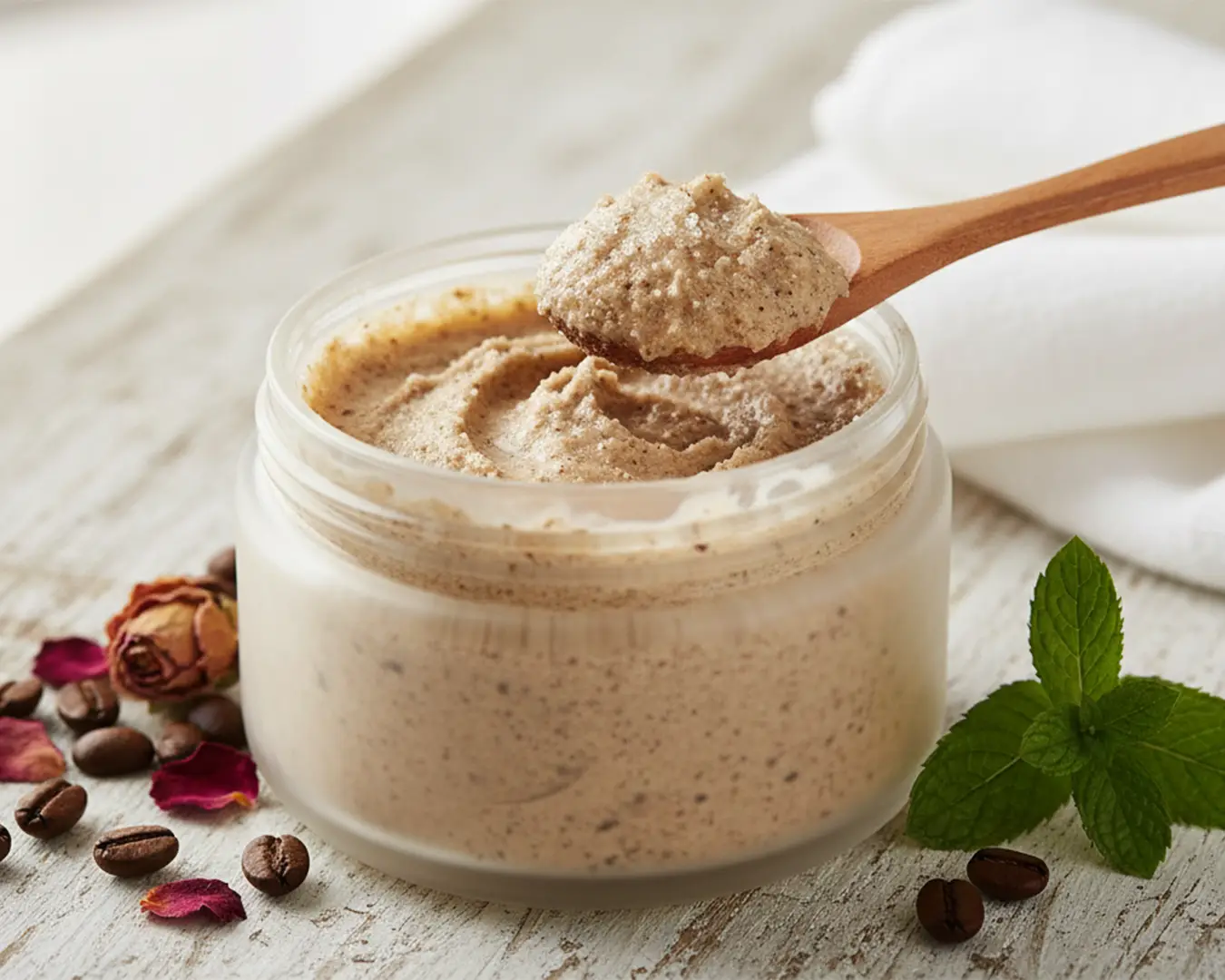
What Does a Body Scrub Do?
A body scrub:
- Loosens and removes dead skin cells
- Helps unclog pores
- Softens rough patches
- Improves product absorption
- Supports a more even-looking tone
Body Scrub vs Body Wash
A body wash (or one of your regular Shower Gels) cleans sweat, oil, and bacteria.
A scrub physically removes buildup sitting on top of the skin.
If you’ve ever wondered about Soaps vs Shower Gels, the difference comes down to cleansing agents and skin feel. But neither replaces exfoliation.
Physical vs Chemical Exfoliation
- Physical Exfoliation: Uses particles (sugar, salt, coffee).
- Chemical Exfoliation: Uses acids like AHA to dissolve dead skin cells.
Both can be effective. The key is protecting your skin barrier. Over-exfoliating, especially on melanin-rich skin, can trigger inflammation and worsen post-inflammatory hyperpigmentation (PIH).
Why Body Scrubs Matter in Modern Skincare
For years, body care was an afterthought. Face routine? Five steps minimum. Body routine? Soap and lotion.
But melanin-rich skin often shows texture and uneven tone more visibly on the body. Dead skin buildup can make knees look darker, elbows feel thick, and legs appear dull even when moisturized.
Exfoliation isn’t about perfection. It’s about maintenance.
The American Academy of Dermatology explains that exfoliation removes dead skin cells from the surface, which can improve texture and help prevent clogged pores. When done correctly, it supports smoother, healthier-looking skin.
For women dealing with body acne, shaving bumps, or hyperpigmentation, body scrubs aren’t extra. They’re foundational.
Benefits of Body Scrub
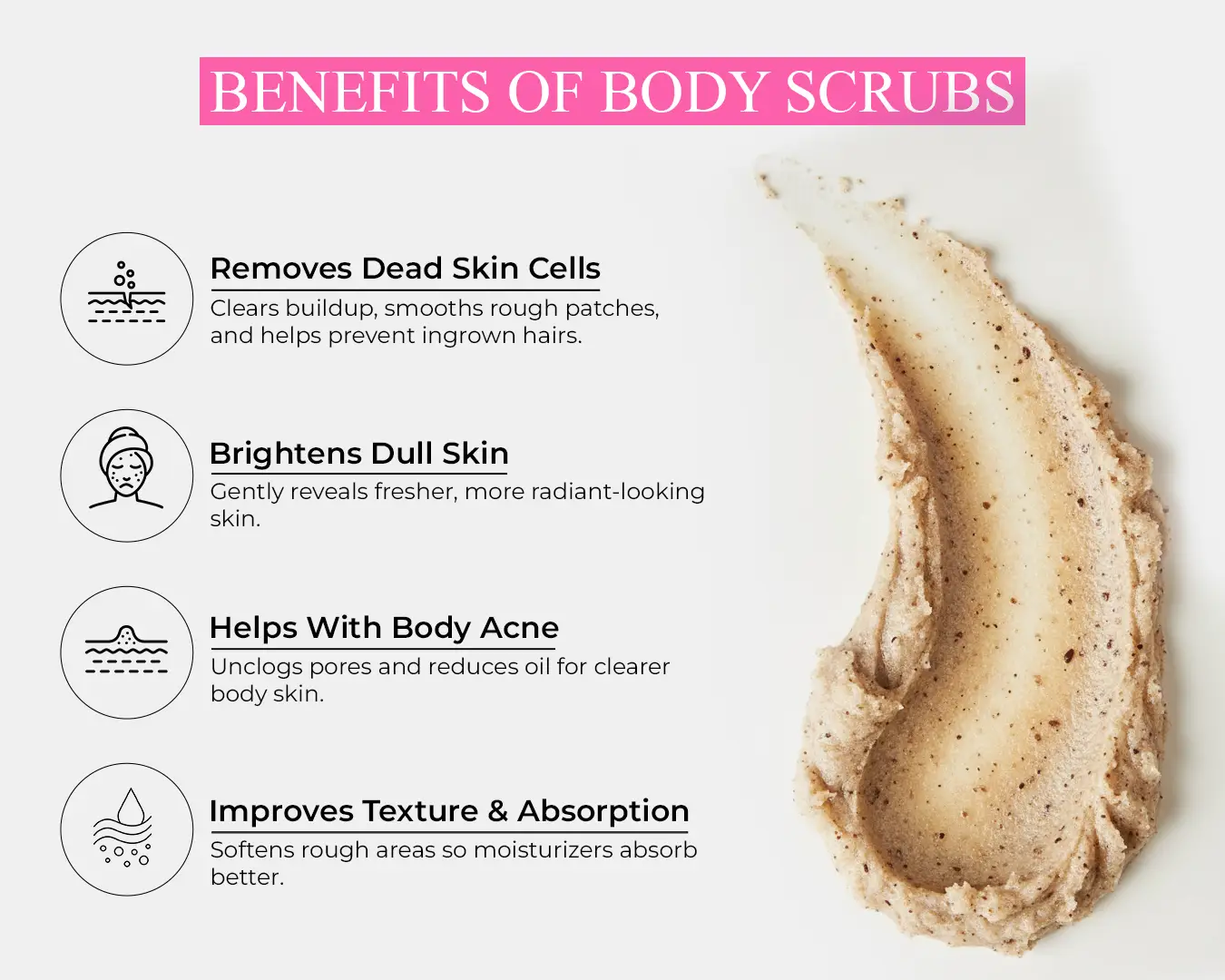
If you are not convinced yet, we are going through all the benefits of body scrubs, so that you don’t miss out. A body scrub:
1. Removes Dead Skin Cells
Dead skin doesn’t shed evenly on everyone. On brown and black skin, buildup can show up as:
- Ashy patches
- Flakiness
- Thick elbows
- Rough knees
- Ingrown hairs
A textured exfoliant like the Coffee Sea Salt Scrub can help with deeper buildup on areas like heels and legs.
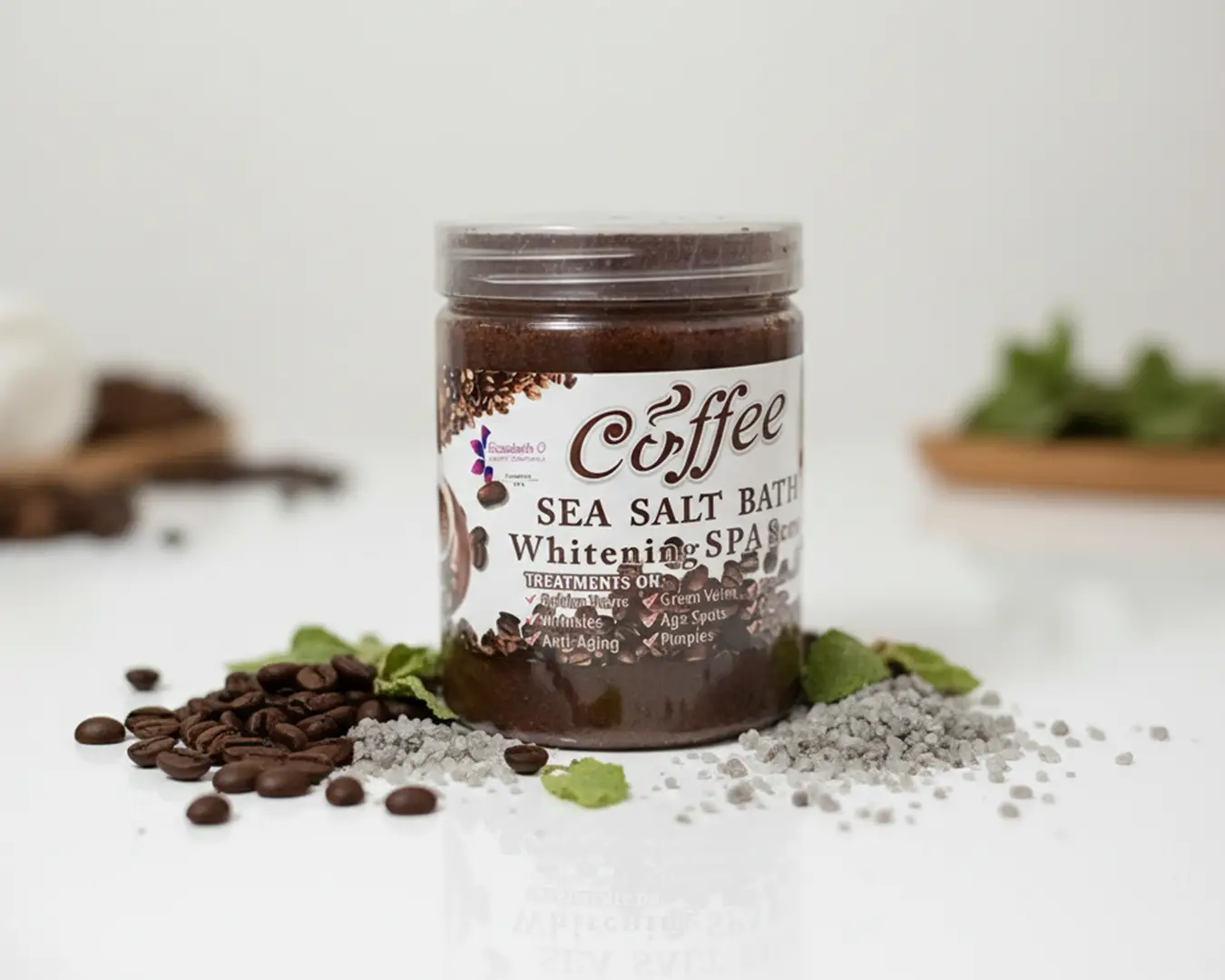
This is especially helpful before shaving to reduce trapped hairs.
2. Brightens Dull Skin
When skin looks dull, it’s often not about color; it’s about buildup.
Gentle exfoliation helps reveal fresher skin underneath. Options like a Honey and Turmeric Body Scrub or a Lemon Turmeric Scrub combine exfoliation with ingredients traditionally known for brightening support.
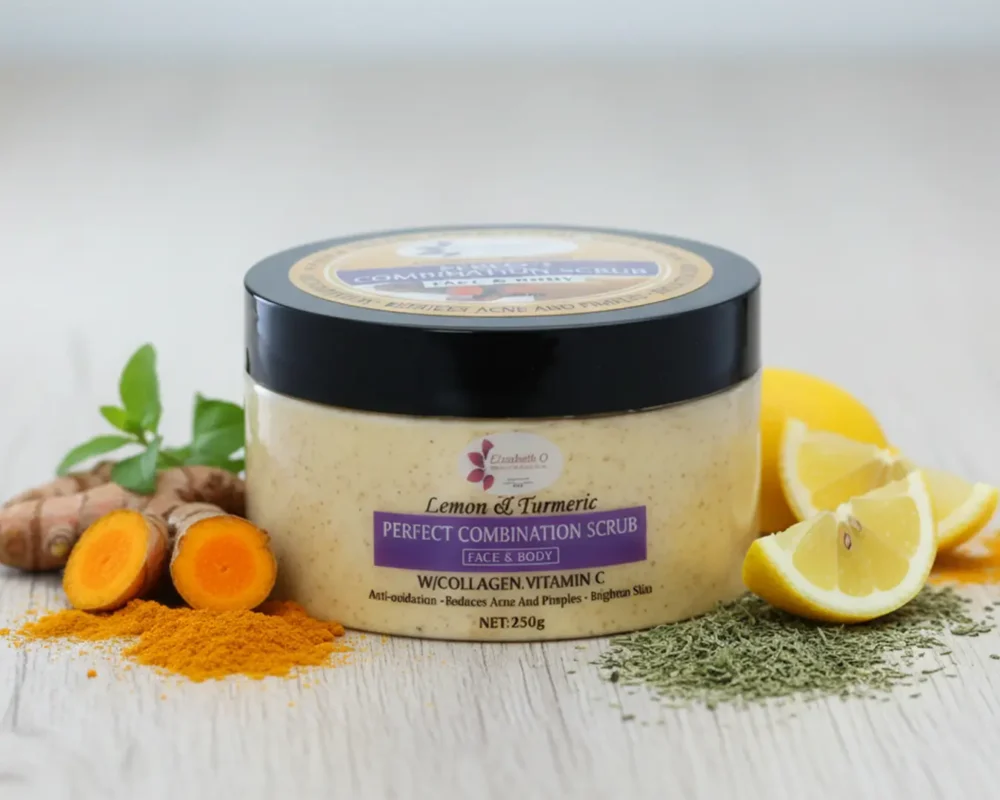
For melanin-rich skin, gentleness matters. Aggressive scrubbing can cause micro-inflammation, increasing the risk of PIH. Slow and consistent is always better than harsh and fast.
3. Helps With Body Acne
Back acne and chest acne are common, especially in warmer months.
Exfoliation can help:
- Clear clogged pores
- Reduce oil buildup
- Minimize rough texture
But here’s the nuance: never scrub active, inflamed acne aggressively. That can spread bacteria and deepen dark marks.
Look for anti-inflammatory ingredients and use light pressure. Remember, PIH often lasts longer than the breakout itself.
4. Improves Skin Texture
Some areas naturally build thicker skin:
- Knees
- Elbows
- Ankles
- Feet
Regular exfoliation helps soften these areas. It can also help reduce the appearance of shaving bumps when used before hair removal.
5. Boosts Absorption of Skincare
If your lotions feel like they sit on top of your skin, buildup may be blocking absorption.
Exfoliation allows moisturizers to penetrate more effectively. This is especially helpful during colder months when you’re layering thicker creams or using the best oils for winter hydration.
Smooth skin absorbs better. Period.
6. Evens Skin Tone
Uneven tone on the body often shows up as:
- Dark knees
- Dark underarms
- Inner thigh discoloration
- Old acne marks
While exfoliation alone won’t erase hyperpigmentation, it supports ingredients like:
- Alpha Arbutin
- AHA
By removing surface buildup, these ingredients can work more effectively. Consistency is key. Overdoing it will only delay results.
In Summary
Body scrubs can:
- Remove dead skin cells
- Reduce rough texture
- Help with ingrown hairs
- Support brighter-looking skin
- Improve product absorption
- Complement hyperpigmentation treatments
How to Choose the Right Body Scrub
Not all scrubs are created equal. Your skin concern should guide your choice.
Within the Body Scrubs collection at Elizabeth o Beauty, you’ll find options designed for different needs, from texture to uneven tone.
Here’s a simple breakdown:
| Skin Concern | Recommended Scrub Type | Frequency | Key Ingredient |
| Rough knees & heels | Coffee Sea Salt Scrub | 2-3 times a week | Sea salt, coffee |
| Uneven tone | Lemon Turmeric Scrub | 2–3 times a week | Turmeric, brightening agents |
| Dull skin | Honey and Turmeric Body Scrub | 2 times a week | Honey, turmeric |
| Sensitive skin | Gentle sugar scrub | 1–2 times a week | Fine sugar |
| Dark marks | Alpha Arbutin & AHA scrub | 2 times a week | Alpha Arbutin, AHA |
Choose texture wisely. Larger granules are better for thicker skin areas. Finer particles are safer for sensitive or acne-prone zones.
When and How Often to Use a Body Scrub
Dermatologists generally recommend exfoliating 2–3 times per week.
Daily exfoliation is not better. It weakens your barrier and can increase irritation, especially for melanin-rich skin prone to PIH.
Best Times to Exfoliate
- Before shaving (reduces ingrown hairs)
- Before waxing
- Before applying self-tanner
- In the evening (allows barrier recovery overnight)
Morning use is fine, but follow with sunscreen if skin will be exposed.
Quick Reminder
- 2–3 times weekly is enough
- Avoid scrubbing inflamed acne
- Don’t exfoliate sunburned skin
- Moisturize immediately after
Your barrier protects your pigment. Protect your barrier.
How to Apply Body Scrub: Step-by-Step Guide
Following this step by step scrubbing routine, you get a smoother, brighter and radiant skin within a few weeks.
- Start with a warm shower to soften skin.
- Cleanse lightly using Shower Gels.
- Apply scrub to damp (not dripping) skin.
- Massage in gentle circular motions.
- Focus on knees, elbows, and feet.
- Rinse thoroughly.
- Apply moisturizer immediately while the skin is slightly damp.
Mistakes to Avoid
- Scrubbing dry skin
- Using daily
- Applying heavy pressure
- Exfoliating active, inflamed acne
- Skipping moisturizer afterward
Think of exfoliation as controlled maintenance, not aggressive correction.
Final Thoughts
If your skin feels rough, looks uneven, or doesn’t absorb moisture well, exfoliation may be the missing step.
A body scrub won’t erase dark marks overnight. It won’t replace sunscreen or targeted treatments. But when used consistently and gently, it supports:
- Smoother texture
- Brighter-looking tone
- Fewer ingrown hairs
- Better absorption of your products
Choose based on your skin’s needs. Protect your barrier. Stay consistent.
If you’re ready to refine your routine, explore the full Body Scrubs collection at Elizabeth o Beauty and find the option that fits your skin, not trends.
FAQs About Body Scrubs
How often should you use a body scrub?
2–3 times per week is ideal for most skin types. Sensitive skin may need 1–2 times weekly.
Should I use body scrub before or after body wash?
Use after cleansing. Clean skin allows the scrub to work more effectively.
Is exfoliating good for eczema?
Not during active flare-ups. Exfoliation can worsen irritation. Always consult a dermatologist.
Do I use body scrub before or after soap?
After cleansing with soap or body wash. Cleansing first removes dirt so exfoliation can focus on dead skin.


Pingback: zoloft generic 25 mg
Pingback: metoprolol tartrate 25 mg for anxiety
Pingback: lamotrigine 100 mg pill