

The best face serums for oily skin come down to one thing: what the active ingredients actually do once your cleanser, moisturizer, and SPF have reached their limit.
Oily skin is not a flaw. Your sebaceous glands are doing exactly what they were designed to do. The problem is that they are doing it in overdrive, and no amount of blotting paper or mattifying primer fixes the reason why.
A moisturizer just seals the surface, and a cleanser washes off whatever’s built up on top. But a serum gets deep with concentrated actives and actually changes things.
Whether you are facing shine, congestion, large pores, or marks left by breakouts, targeted penetrate deeply to treat these issues at their source.
This guide walks you through everything you need to know about oily skin: which ingredients actually work, how to layer them the right way, and which serums are worth spending your money on.
What Causes Oily Skin
Oily skin comes down to your sebaceous glands producing more sebum than your skin needs.
Sometimes that’s just genetics, at times hormones, and sometimes, annoyingly, it’s the products you’re already using that make the problem worse.
Most people see it first across the forehead, nose, and chin. The classic shine an hour after you’ve washed your face, even though you just washed it.
Oily skin isn’t broken. It’s not something that needs fixing in the way people talk about it. It actually ages a bit slower than drier skin and holds onto moisture better on its own.
The goal with face serums was never to dry your face & body into oblivion. In fact, the goal is to balance your skin shine.
How To Tell If You Have Oily Skin
Oily skin itself has a few telltale signs:
- A shiny or greasy look, especially across the forehead, nose, and chin, by midday.
- Pores that look larger, particularly on the nose and cheeks.
- Makeup that slides off or gets patchy faster than it should.
- A higher tendency toward blackheads and breakouts.
- Skin that still feels somewhat thick or resilient compared to drier skin types.
How Serums For Face Work Differently From Moisturizers
Serums deliver concentrated active ingredients deep into your skin to actually fix a specific problem, not just sit on top of it as a moisturizer does.
They’re loaded with 10 to 20 percent active ingredients, compared to just 1 to 5 percent in most moisturizers. That’s why a moisturizer mostly seals things in, while a serum gets in and changes your skin from within.
That’s a big gap, and for oily skin, it’s worth closing, because without a serum, you’re stuck managing oil all day instead of actually fixing why it’s there.
How To Choose The Right Facial Serum For Oily Skin
Don’t grab the first bottle that says “oil control.”
Water-based or gel serums sink in fast and won’t add to the grease. If it feels heavy or sits there like a film, put it back. That’s a red flag for oily skin, no exceptions.
Check for “non-comedogenic” on the label. It means the formula was tested to avoid clogging pores. Not a guarantee, nothing in skincare is, but it tells you the brand at least thought about people dealing with congestion.
Match the ingredient to your actual problem. If your skin looks shiny and greasy throughout the day, niacinamide is a great option. If blackheads are your main issue, salicylic acid is usually the better choice. Don’t pick something because it’s trending this week.
And be realistic about money. A $6 serum and an $80 serum can both genuinely work. Most of that gap is due to packaging and brand image, not to some massive jump in raw effectiveness.
The Best Ingredients In Facial Serums For Oily Skin
When you’re shopping for a serum, the ingredient list matters far more than the branding or packaging. Ingredients recommended by dermatologists to prevent greasy skin and enlarged pores are as follows:
- Salicylic Acid
- Niacinamide
- Clay
- Hyaluronic Acid
- Retinol
Understanding how each ingredient works can help you choose a product that actually addresses your skin concerns, rather than wasting money on marketing claims. These are the ingredients most experts recommend for oily skin.
Salicylic Acid
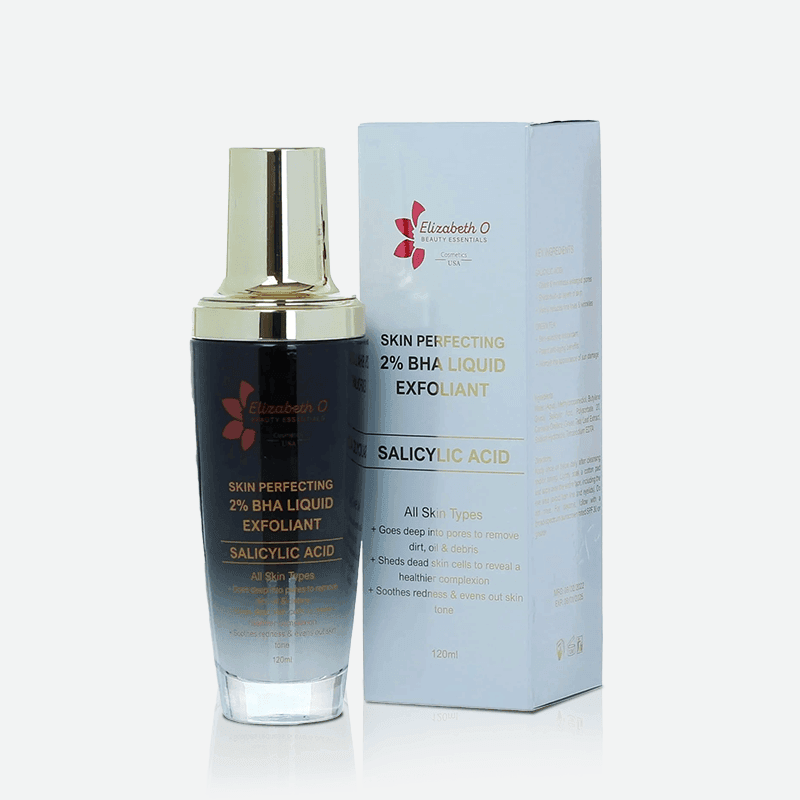
This is a BHA (beta-hydroxy acid), and what matters is that it’s oil-soluble. It can travel into an oil-clogged pore and clear it from the inside, which water-soluble ingredients just can’t do.
The FDA caps over-the-counter salicylic acid at 2 percent for leave-on products. That’s the legal max without a prescription. Honestly, 2 percent does plenty, and it calms redness.
(Consultant dermatologist, British Skin Foundation) gives a really practical way to figure out which ingredients actually work for oily skin. He suggested that salicylic acid works because it’s oil-soluble, meaning it can cut through excess sebum and reach your pores. Retinoids, on the other hand, work by reducing how much sebum your glands produce in the first place. They are two different mechanisms, both effective.
Niacinamide
Niacinamide, a form of vitamin B3, is one of the most studied ingredients for oil control. Adore Beauty cites 2 to 5 percent as the proven-effective range without irritation for most people.

The formula combines 10% niacinamide with retinol, vitamin B12, and arbutin. Niacinamide helps block melanin transfer and supports skin regeneration, while retinol tackles fine lines and speeds up cell turnover.
Clay
Clay is rarely the star of a daily serum, and for good reason; its primary role is absorption, drawing excess sebum and surface impurities toward the skin so they can be removed. Kaolin is the gentler of the two clays you will commonly see listed.
It absorbs oil without stripping the skin’s moisture barrier, making it suitable for daily use at very low concentrations. Bentonite is more aggressive, better suited to weekly use in a mask format, particularly for skin that is heavily congested around the nose and chin.
Daily Application Routine
If you see clay listed in a lightweight daily serum, it is typically there in a low concentration for ongoing oil control rather than deep cleansing.
Use clay weekly as a mask; it acts as a reset and is particularly useful in warmer months or after periods of heavy product use, when the skin starts to feel sluggish and clogged.
Hyaluronic Acid
If you’ve been avoiding moisture out of fear that it’ll make you oilier, hyaluronic acid is the ingredient that proves you wrong. It doesn’t add a drop of oil, holds up to 1,000 times its weight in water, and pulls that hydration into your skin’s outer layers. The result is a plump, calm surface that doesn’t signal your glands to overcompensate.
The catch is that the humectant can actually pull moisture out of your skin, especially in a dry indoor environment. The whole idea behind comes down to that one damp-skin rule: sealing it in fast so the hydration stays where you want it.
For a natural yet highly effective serum, is a standout. Enriched with peptides, Hyaluronic acid, green tea extract, and rose hips, it delivers anti-inflammatory benefits that are especially useful for oily, breakout-prone skin, just as it helps calm irritation linked to premature aging.

Retinol
Retinol isn’t just an anti-aging word people throw around. It speeds up cell turnover, so dead skin cells are less likely to mix with oil and clog pores. ReadySleek puts visible results at 6 to 12 weeks. It may work slowly, but it’s worthy enough for long-term pore health.
Top Recommended Serums for Oily Skin
| Serum Type | Best For | Key Ingredient(s) | Texture | Price Range ( approximately ) |
| Niacinamide Serum | Overall shine control, large pores | Niacinamide 2-5% | Lightweight, water-based | $6-$20 |
| Salicylic Acid (BHA) Serum | Blackheads, clogged pores, texture | Salicylic acid 2% | Liquid, slightly tacky | $10-$35 |
| Vitamin C Serum | Post-acne dark spots, dullness | Ascorbic acid, vitamin E | Lightweight, layers well with peptides | $15-$60 |
| Hyaluronic Acid Serum | Hydration without grease | Hyaluronic acid | Gel-like, fast absorbing | $6-$25 |
| Multi-active Serum | Combination of concerns in one step | Vitamin C, peptides, rose hips, green tea, hyaluronic acid | Lightweight with layered benefits | $25-$80+ |
In the vitamin C row, look for formulas pairing ascorbic acid with vitamin E. Vitamin E stabilizes vitamin C and extends how long it stays active. When you’re figuring out the morning order that works for most people is refreshingly simple, and that is:
- Cleanse with something gentle that doesn’t strip your skin.
- Tone to balance and prepare the surface.
- Apply the vitamin C serum while your skin is still slightly damp so it absorbs cleanly.
- Wait about a minute, then follow with a lightweight moisturizer.
- Finish with a broad-spectrum sunscreen every single morning without fail.
When selecting a serum for oily or acne-prone skin, look for formulations that clear congestion without compromising the skin barrier.
The Correct Order To Apply Face Serums for Oily Skin
Here’s the order, step by step.
Step 1: Cleansing
Use a gentle, oil-free cleanser. Don’t strip your face completely. That just tells your skin to make more oil later to compensate, which defeats the purpose.
Step 2: Toner
After cleansing, apply a skin toner like , which penetrates your pores to clear congestion before any serum can do its job. Wait about a minute for it to dry down.
Step 3: Hydrate
Apply Hyaluronic acid serum on slightly damp skin to lock in moisture right away.
Step 4: Skin Regulation
Use niacinamide here, usually in the morning, which will work in the background throughout the day.
Step 5: Targeting Texture and Congestion
Apply salicylic acid at night, two to three times a week to start. Going in too hard, too fast, is the mistake almost everyone makes at least once.
Step 6: Restore and Protect
Rub in vitamin C in the morning for antioxidant protection. Works fine alongside niacinamide, despite what some old internet myths still claim.
Final Thoughts
There’s no single best face serum for oily skin that works for everyone. But there’s a best one for you, depending on what’s actually bugging you.
When shine is the main issue, niacinamide usually helps the most. For blackheads or enlarged pores, salicylic acid is generally your best bet. And if you’re trying to fade dark marks from old breakouts, vitamin C tends to give the clearest results.
Frequently Asked Questions
Q1. Can I use a vitamin C serum in the morning and a BHA serum at night?
Yes, that routine works very well. Vitamin C in the morning gives antioxidant protection through the day, and salicylic acid at night handles pore congestion while you sleep.
Q2. Why does my serum make my skin more oily?
It is due to a heavy, oil-based formula on already oily skin, or to something that isn’t non-comedogenic. Switching to lightweight, water-based, non-comedogenic usually fixes it.
Q3. Is a BHA liquid exfoliant the same as a serum?
Not exactly, but they’re pretty close. Think of it this way: a BHA liquid exfoliant is a specific product that unclogs pores and smooths texture with salicylic acid. A serum can do that too, but a serum can also do a bunch of other things, like hydrate, brighten, or calm redness. A BHA exfoliant usually feels more like a watery toner and might sting a little faster. A serum tends to feel slightly thicker, even if it’s still lightweight.
Q4. Will a vitamin C serum turn orange?
Eventually, yes. It oxidizes over time, causing that color shift and a drop in effectiveness. Keep the bottle in a cool, dark spot and close the cap tightly. That slows things down a lot. But once it’s noticeably orange or brown? Time to say goodbye and grab a fresh one.